In brief

Compare file, database and application-interface routes using the same identified order, approved values and released template. Ask how each route validates data, acknowledges the request and establishes what physically printed or was applied. Challenge an interrupted job and reconcile output before choosing how retries and controlled reprints should work.

Prepare the field, source and template record and agree the same exception and reconciliation checks. Choose from the actual systems' supported interfaces; connecting a printer does not establish complete business-system integration.

On the production floor

See how the complete system fits your production line — Label Data Integration

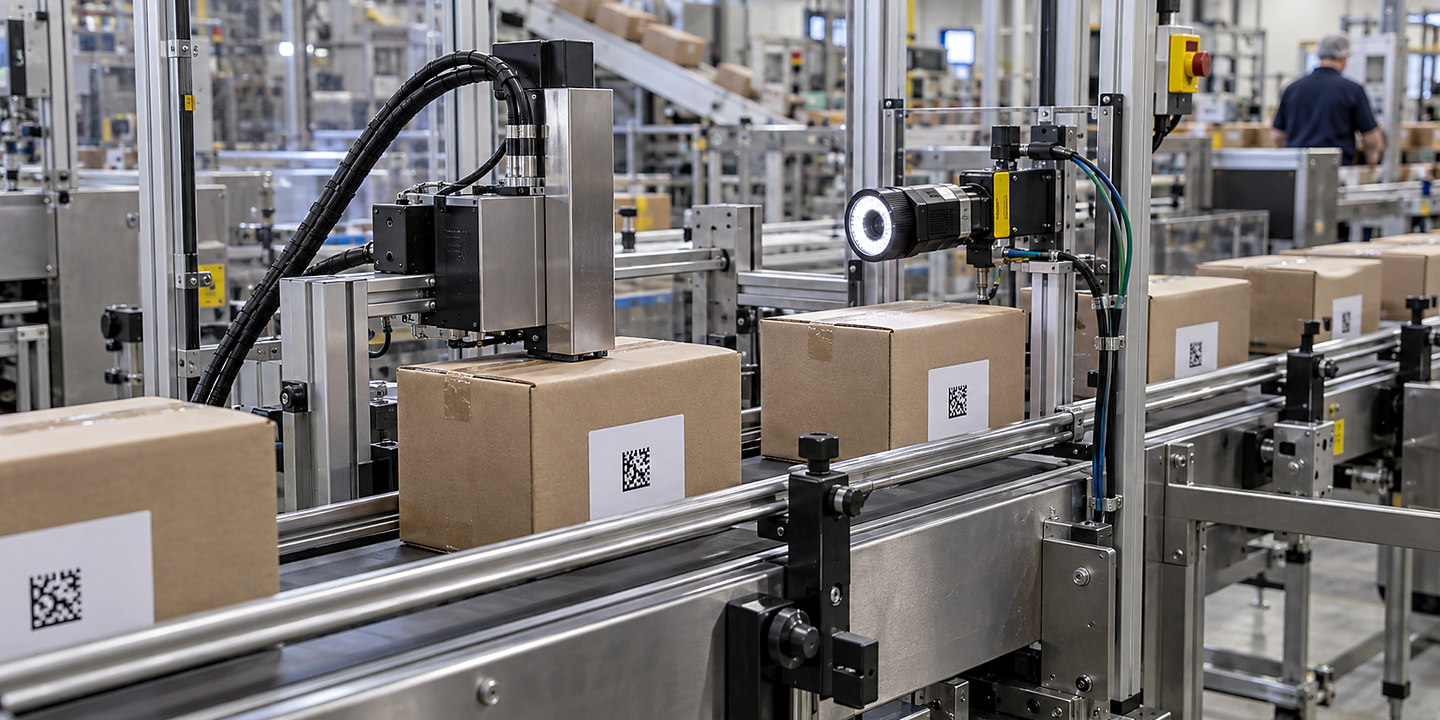
Plan label data integration around your identifiers, substrates, production events, system interfaces, exceptions and verification records. Discuss a practical data-flow approach with Oxford Traceability. When you compare solutions, check how each option handles identifier and data rules for connecting label printing to business data, substrate, label or tag behaviour and your surrounding line.

Discuss your application
How we can help

Label Data Integration support from first review to production use

Understand your requirement

List printed fields, authoritative sources and owners, formatting/validation rules and calculated values. Identify the order-release trigger, request identity, quantity, destination and released template version; resolve conflicting sources before designing the interface.

Compare suitable approaches

Compare supported file, database and application-interface routes against the same approved order and interrupted-print example. Define completed-file detection, archive/rejection handling, access/change ownership or acknowledgement/retry behaviour as appropriate to each route.

Fit the complete line

Agree what queued, printed and applied confirmations are available and how physical output will be checked. Define handling for spoiled, unused and cancelled labels, controlled reprints, access permissions, retention and production/support responsibilities.

Prove and support the result

Use controlled test identities to challenge missing fields, invalid combinations, wrong templates, cancelled/amended orders and printer/network interruptions. Reconcile expected and actual physical output with the final record, retaining discrepancies and unresolved limits.

Typical support: requirements definition, marking or identification trials, controls and data integration, verification and documented acceptance.

Compare your options

Compare label data integration with simpler routes

ApproachOften suitable whenWatch for
Label Data IntegrationYou need a dedicated solution for a clearly defined duty, product or part range and line interface.Mark, label, tag and reader performance depends on the real substrate and environment.
Label-Based Identification where Direct Marking Is UnsuitableYour volumes, product mix or operator judgement make a simpler route more practical.Check ergonomics, consistency and safe access before choosing the lower-complexity option.
Direct-Part Marking where Lifecycle and Substrate Justify ItYour surrounding process is stable enough for a broader automated solution to add value.Allow for line connections, fault recovery and maintenance as well as the headline equipment.
What to send us

Help us give you useful guidance