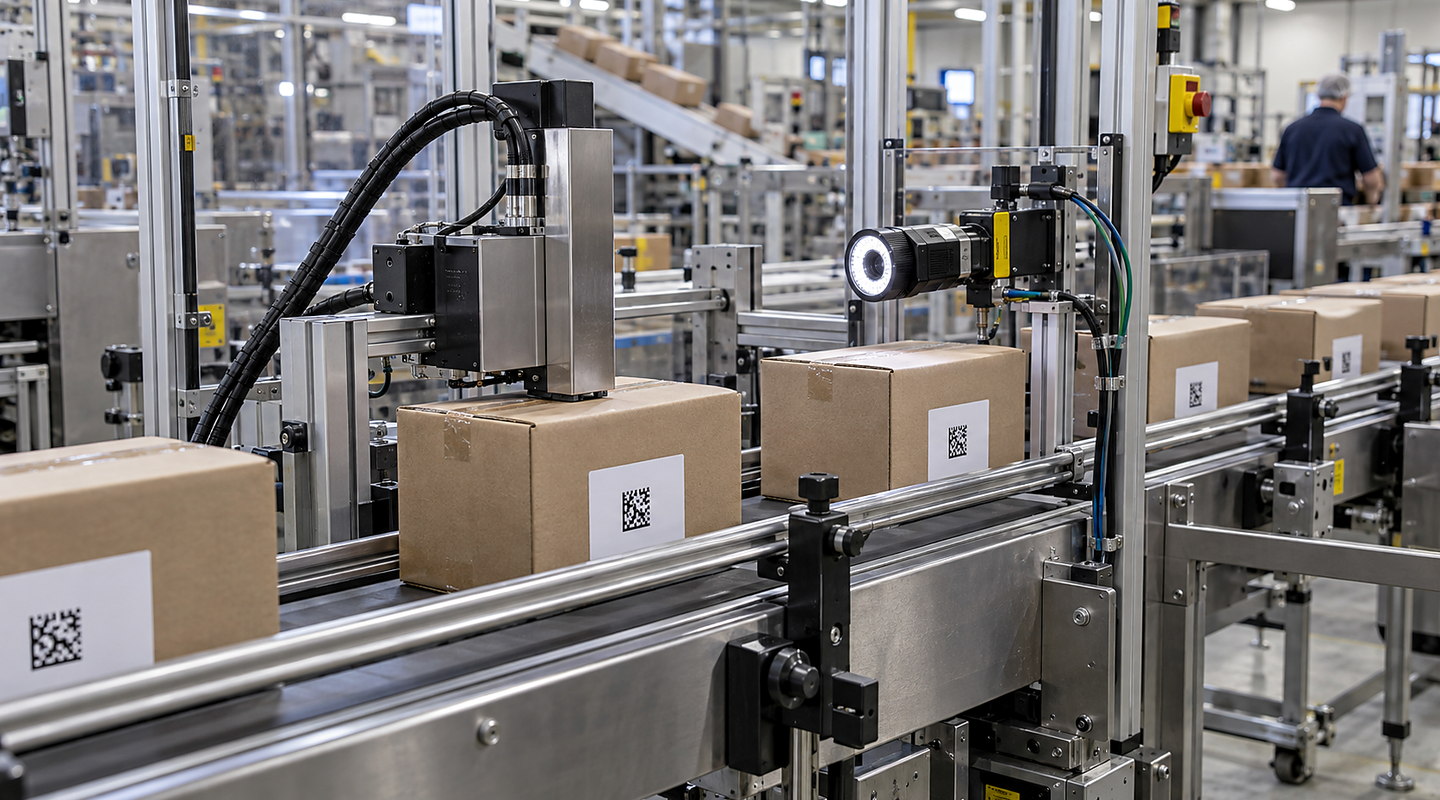
Label Data Integration Verification and exception checklist
Test label integration using controlled identities, invalid fields, wrong templates, cancelled orders, printer and connection faults, physical-label counts and reconciled retry decisions.
In brief
Use controlled test data and an identified order with approved values, a released template and a known quantity. Compare the request, visible label, decoded data and final production record. Challenge missing or invalid values, a wrong template, amendments/cancellations and printer or connection failures, reconciling printed, applied, spoiled, unused and pending output before any retry.
Turn your production information into clearer decisions — Label Data Integration
Plan label data integration around your identifiers, substrates, production events, system interfaces, exceptions and verification records. Discuss a practical data-flow approach with Oxford Traceability. Use this guide to resolve verification, retention and reconciliation evidence before it limits the final system.
Verification, Retention and Reconciliation Evidence: condition, range and effect on your process
Current condition
Record approved field values and sources, owners, validation/formatting rules, calculations, released template version and identified order/quantity/destination. State which queue, print and application confirmations the actual systems provide.
Realistic range
Represent product/template variants, mandatory and long fields, leading zeros and date formats. Include normal running, printer unavailability, an interrupted connection, cancelled/amended orders and controlled reprints using separate test identities.
Effect on the system
Compare the expected request, visible label, decoded content and final record. Reconcile physical output and pending work before retrying, recording discrepancies, access/support responsibilities and the owner of unresolved outcomes.
Before you contact us
Five questions about verification, retention and reconciliation evidence for your application
Who can confirm this information?Identify the business-data and identifier owners, template approver, production users and interface/support owners responsible for field rules, job release and reconciliation.
How representative is the sample?Use approved test values and the actual product/template variants, print destinations, quantities and available acknowledgements, keeping test identities separate from production.
What is the difficult condition?Challenge missing or invalid data, a wrong template, cancellation/amendment, printer fault and a lost connection after some labels may already have printed.
How will you judge the result?Agree expected values, physical-output counts and final record before testing. Retain visible/decoded labels, request identities, acknowledgements, discrepancies and the authorised retry or reprint decision.
What else must be coordinated?Agree source-system interfaces, access/change ownership, template release, physical-label handling, retention and support, with an explicit owner for uncertain outcomes and controlled replacement labels.
Connected details
Review verification, retention and reconciliation evidence as part of the complete system
Question 1
Identifier and Data Rules for Connecting Label Printing to Business Data
For Label Data Integration Verification and exception checklist, describe the current position, required outcome, acceptable limits and known exceptions for identifier and data rules for connecting label printing to business data. That lets us compare options against your real production rather than one nominal value.
Question 2
Substrate, Label or Tag Behaviour
For Label Data Integration Verification and exception checklist, describe the current position, required outcome, acceptable limits and known exceptions for substrate, label or tag behaviour. That lets us compare options against your real production rather than one nominal value.
Question 3
Production Speed and Read-Point Conditions
For Label Data Integration Verification and exception checklist, describe the current position, required outcome, acceptable limits and known exceptions for production speed and read-point conditions. That lets us compare options against your real production rather than one nominal value.
Question 4
Line, Business-System and Network Interfaces
For Label Data Integration Verification and exception checklist, describe the current position, required outcome, acceptable limits and known exceptions for line, business-system and network interfaces. That lets us compare options against your real production rather than one nominal value.
Question 5
Exception, Rework and Duplicate Handling
For Label Data Integration Verification and exception checklist, describe the current position, required outcome, acceptable limits and known exceptions for exception, rework and duplicate handling. That lets us compare options against your real production rather than one nominal value.
Question 6
Verification, Retention and Reconciliation Evidence
For Label Data Integration Verification and exception checklist, describe the current position, required outcome, acceptable limits and known exceptions for verification, retention and reconciliation evidence. That lets us compare options against your real production rather than one nominal value.